
Filters
82mm 2-5 ND.
A variable ND filter covering 2–5 stops. It holds a cinematic shutter angle and a wide aperture in daylight instead of forcing us to stop down and lose the shallow depth of field.
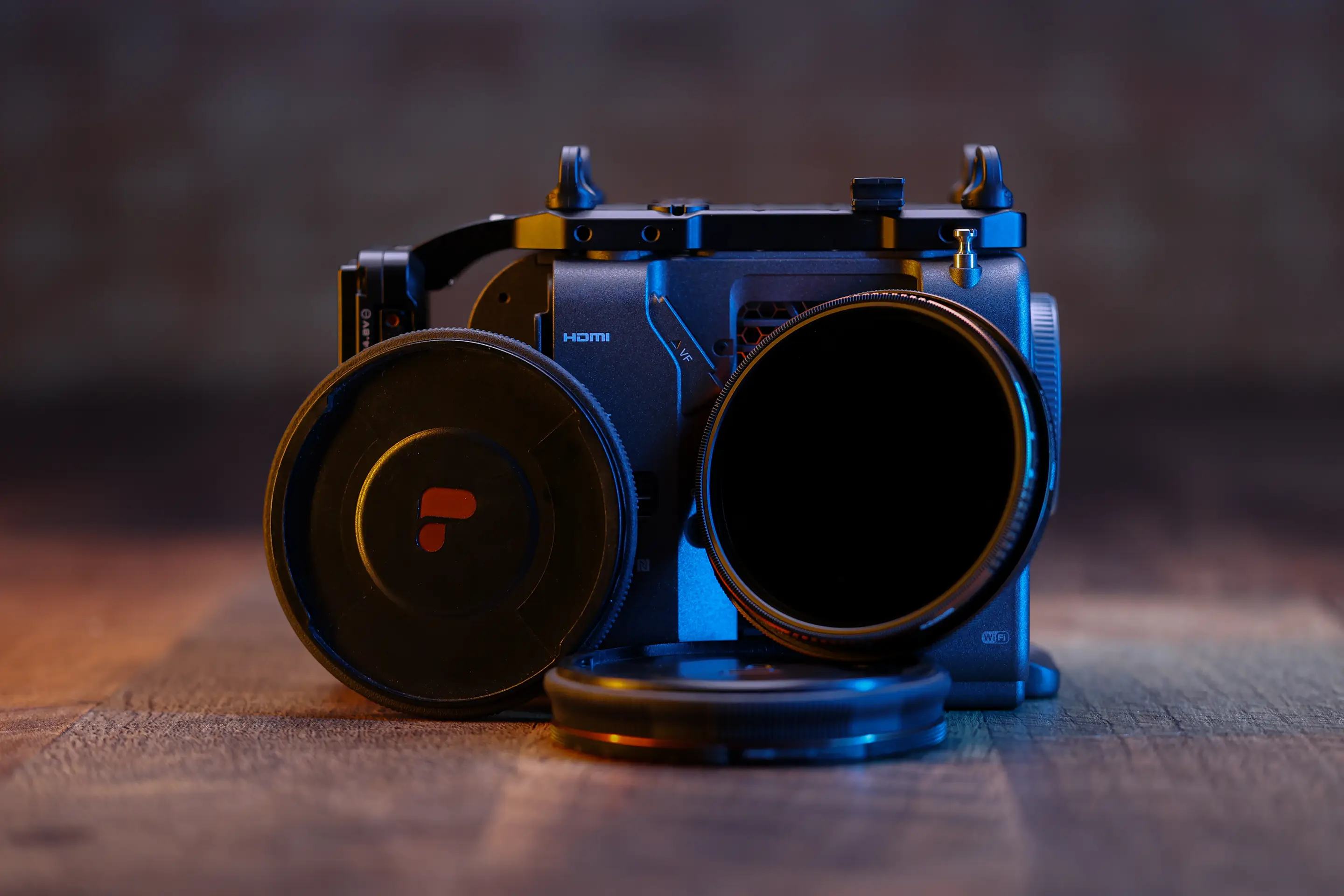
Specs
- Filter thread
- 82mm
- Type
- Variable neutral density
- Range
- 2-5 stops
The filter that lets us keep the shutter where it belongs.
A variable ND is a pair of polarising elements that you rotate against each other to dial in how much light reaches the sensor. It does nothing to colour or composition. It just takes light away, on demand, without you having to change any of the settings that actually define the look of a shot.
That matters because motion picture exposure has two settings we do not want to touch. Shutter angle should stay near 180 degrees, which is what gives motion the natural amount of blur that reads as cinematic rather than stuttery or smeared. Aperture is how we control depth of field, and on most of what we shoot we want it open, because a shallow background is half the reason the image looks like a film and not a security camera. Both of those are creative decisions, and both of them let in a lot of light.
Why the 2-5 stop version.
This is the light-duty filter, and it is on the lens more often than the heavy one. It is the right amount of correction for the conditions where we are only slightly overexposed: overcast days, open shade, the hour on either side of sunset, and interiors that are brighter than they look. It is also the one we reach for on a bright window-lit interview.
Keeping the range narrow is a deliberate choice. A variable ND pushed to its extremes starts introducing problems, most famously the cross-shaped darkening on wide lenses that photographers call the X pattern. Splitting the job across two filters, a light one and a heavy one, means each spends its life in the part of its range where it behaves.
- Holds a 180-degree shutter instead of forcing the shutter faster and losing natural motion blur
- Keeps the aperture wide so depth of field stays where we composed it
- Adjusts continuously, so we can track changing light through a take rather than swapping glass
- Sits in the same 82mm thread as the rest of our filters, with step-up rings for smaller lenses
- Doubles as a mild polariser effect when rotated, useful on glass and paint
How it gets used.
We standardise on 82mm because it is the largest thread across our lens set, so one filter covers everything with a step-up ring rather than us carrying four sizes of the same glass. In practice the filter goes on at the start of a scene, gets dialled until the exposure tools say we are where we want to be, and then gets nudged as the light changes.
When the sun is genuinely out and 5 stops is not enough, we hand over to the heavier filter. The two live next to each other in the bag for exactly that reason.