Drones
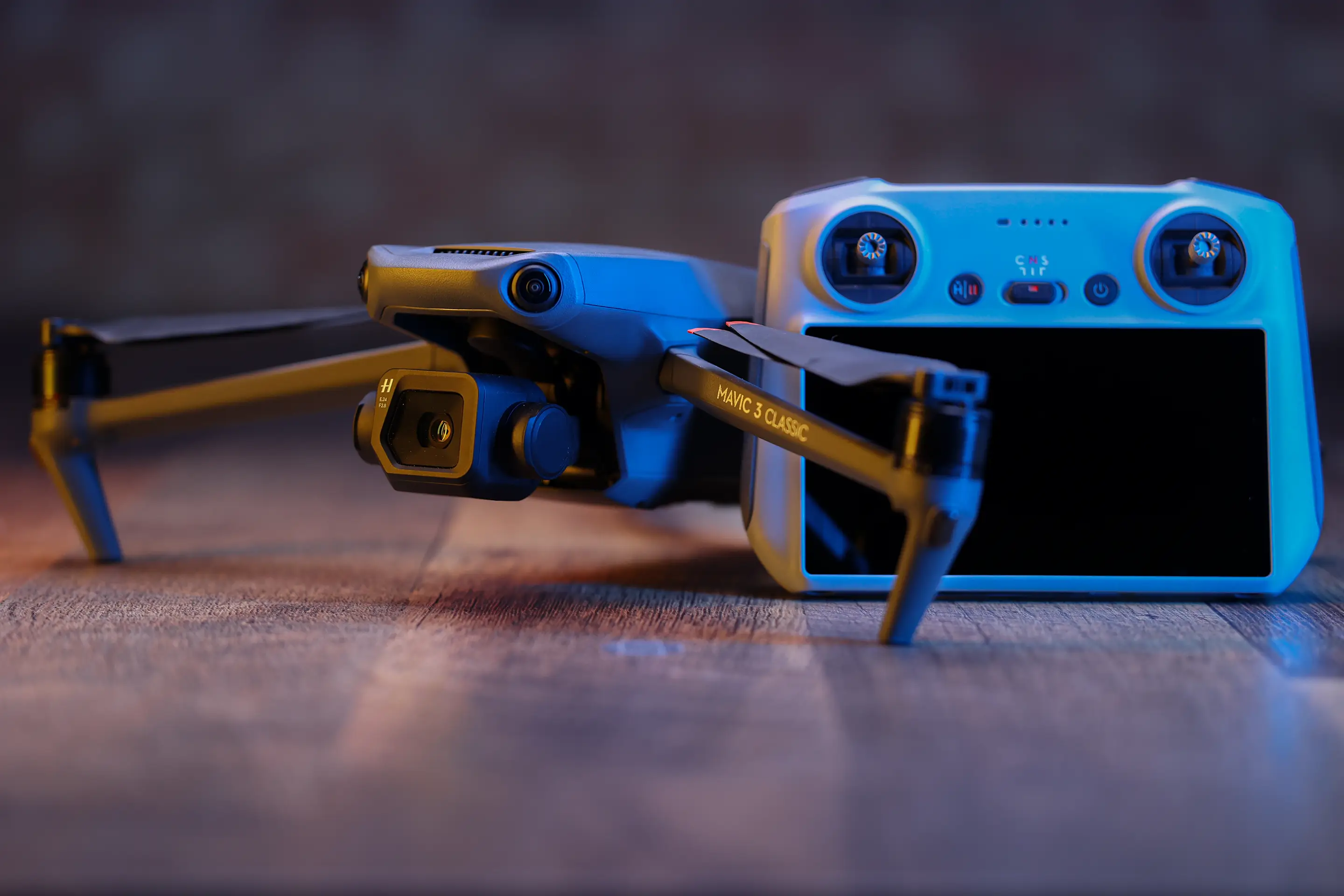
Mavic 3 Classic.
The DJI Mavic 3 Classic carries a Four Thirds sensor for our highest-quality aerial footage, with the flight time to cover large properties and landscapes on a single battery.
Specs
- Sensor
- 4/3 CMOS Hasselblad camera, 20 MP effective
- Lens
- 24 mm equivalent, adjustable f/2.8 to f/11, 84 degree field of view
- Video
- 5.1K up to 50 fps, 4K up to 120 fps, up to 200 Mbps H.264/H.265, with 10-bit D-Log, D-Log M and HLG
- Takeoff weight
- 895 g
- Flight time
- Up to 46 minutes max flight time, 40 minutes hovering
- Transmission
- O3+, up to 15 km (FCC)
- Obstacle sensing
- Omnidirectional, with 12 m/s max wind resistance
The aerial camera we bring when the drone shot is the shot.
The Mavic 3 Classic carries a Four Thirds Hasselblad camera, which is a genuinely large sensor to have hanging under a folding drone. That size buys two things we care about: cleaner images once the light drops, and a picture that cuts against ground cameras without announcing itself as drone footage. It shoots 5.1K up to 50 fps and 4K up to 120 fps at up to 200 Mbps, with 10-bit D-Log for grading.
The detail that ends up mattering most on a real shoot is the mechanical aperture. Being able to stop down from f/2.8 to f/11 means we can hold a 180-degree shutter across changing light without landing to swap ND filters every time a cloud moves. On a wedding day or a tightly scheduled commercial, that is the difference between getting the shot and getting the shot after the moment has passed.
Where it earns the extra weight.
It is heavier and bulkier than our smaller drone, so it comes out when the aerial work carries real weight in the final piece. The long flight time changes how we work as much as the sensor does: 40-plus minutes on a battery means we can hold position and wait for the light, or fly a complicated move six times to get one clean take, instead of racing a low-battery warning.
- Commercial and brand films where aerials are hero shots, not filler
- Large properties, wineries, resorts and commercial real estate
- Wide-scale landscape work across the Columbia Basin, Cascades and Palouse
- Corporate and industrial site coverage that needs a controlled, repeatable move
- Low-light and blue-hour aerials, where the larger sensor pulls ahead
Flying it responsibly.
Omnidirectional obstacle sensing and a 15 km transmission link make the aircraft feel unshakeable, and that is exactly the reason to stay disciplined with it. We fly within visual line of sight, keep a spotter on the aircraft when a shot needs the pilot's eyes in the controller, and we do not fly over people who have not been briefed and consented.
The legal frame is straightforward. In the United States, flying a drone for any commercial purpose requires an FAA Part 107 remote pilot certificate, and an aircraft in this weight class must be registered with the FAA and broadcast Remote ID. Controlled airspace requires authorization before takeoff, and much of the Tri-Cities sits close enough to airports that this is a routine part of pre-production rather than an afterthought.