Lenses
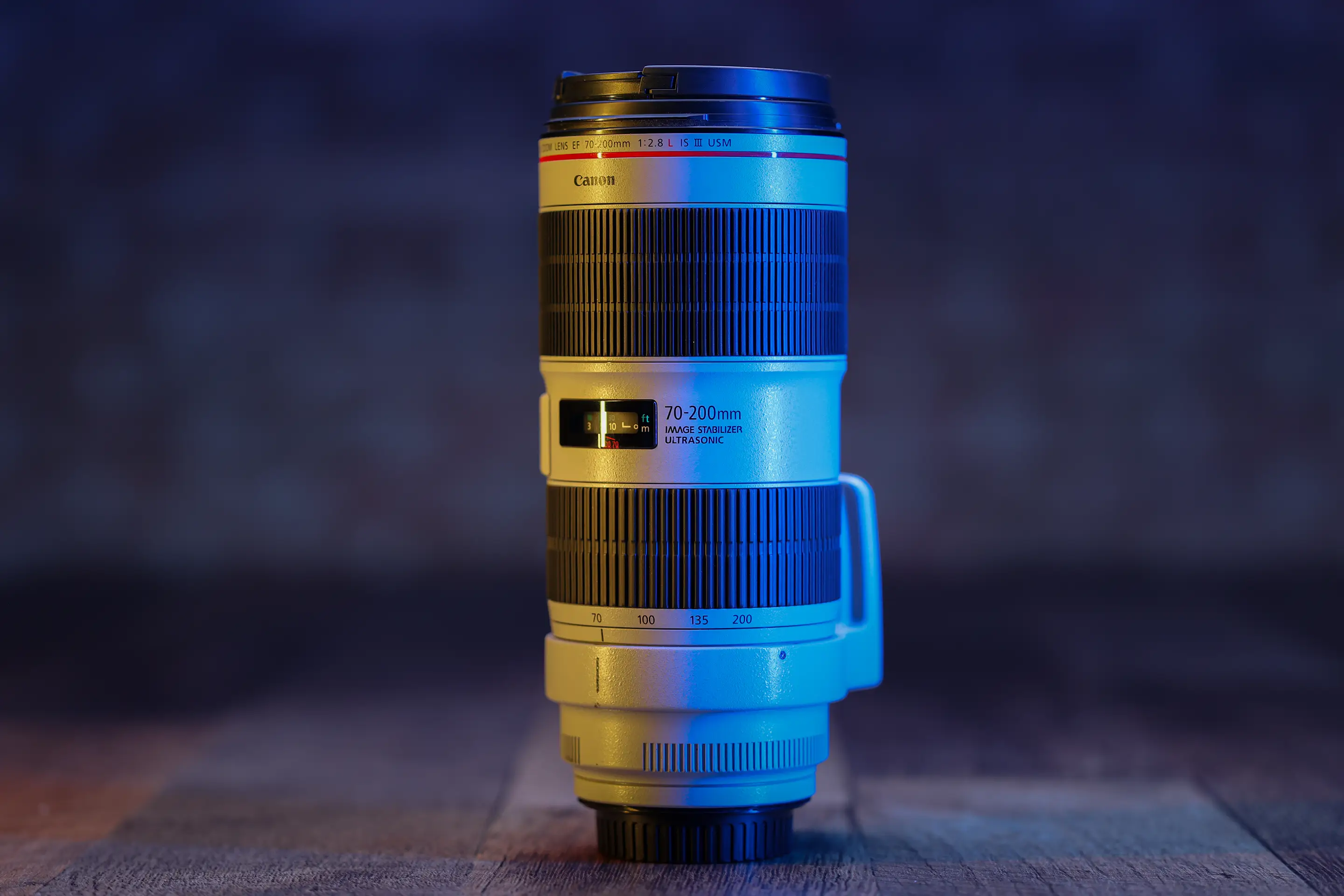
Canon 70-200 F2.8.
The Canon 70-200mm f/2.8 is our compression lens — it flattens backgrounds and isolates a subject from a distance. It's how we cover ceremony moments without standing in the aisle.
Specs
- Focal length
- 70-200mm
- Maximum aperture
- f/2.8, constant across the zoom range
- Minimum aperture
- f/32
- Filter size
- 77mm
- Stabilization
- Optical Image Stabilizer
- Minimum focus distance
- 1.2m (EF version)
- Mount
- Canon EF (Canon also builds this lens in RF)
The lens that lets us stay out of the moment.
A 70-200mm f/2.8 lives on a body at nearly every event we cover. Its whole job is distance. It lets us stand at the back of a room, across a field, or behind the last row of chairs and still fill the frame with someone's face. Nobody has to work around us, nobody looks into a lens, and the footage keeps the quality of something observed rather than staged. For a wedding videographer, that is most of the job.
The constant f/2.8 is the other half of the argument. Pushing from 70mm to 200mm costs nothing in light, so we can recompose mid-ceremony without chasing exposure. At 200mm and wide open, the background compresses and goes soft, which is how a cluttered venue, a parking lot behind a ceremony site, or a hotel ballroom full of chairs quietly stops being a problem.
What we shoot with it.
- Ceremonies and vows, framed tight from the back of the room where a camera is not a distraction
- Toasts, first dances, and reception speeches once the house lights come down
- Corporate and conference coverage — keynotes, panels, award presentations
- Long-lens portrait sets: engagements, seniors, quinceañera portraits, headshots
- Automotive and product detail passes, where a wide lens would bend the proportions
Interviews and brand work.
On commercial and corporate shoots we often build the A-camera interview frame somewhere between 135mm and 200mm. The subject separates cleanly from whatever is behind them, an office or shop floor reads as a soft field of color instead of a list of distractions, and the person on camera can sit far enough from the lens to forget it is there. We pair that with a wider second angle for cutaways and B-roll so the edit has somewhere to go.
Weight, weather, and the honest limits.
It is a heavy lens. For a full ceremony or an hour-long keynote it goes on a monopod or a shoulder rig, because handheld at 200mm for forty minutes is a losing fight. The stabilizer helps, but it is not a substitute for support. Minimum focus is about four feet on the EF version, so ring shots and other close detail work belong to a different lens in the bag. What we do get is a weather-sealed L-series barrel, which matters more in Seattle and Portland than most people admit — a lot of our Pacific Northwest work happens in a light drizzle that never quite becomes rain.