Monitors
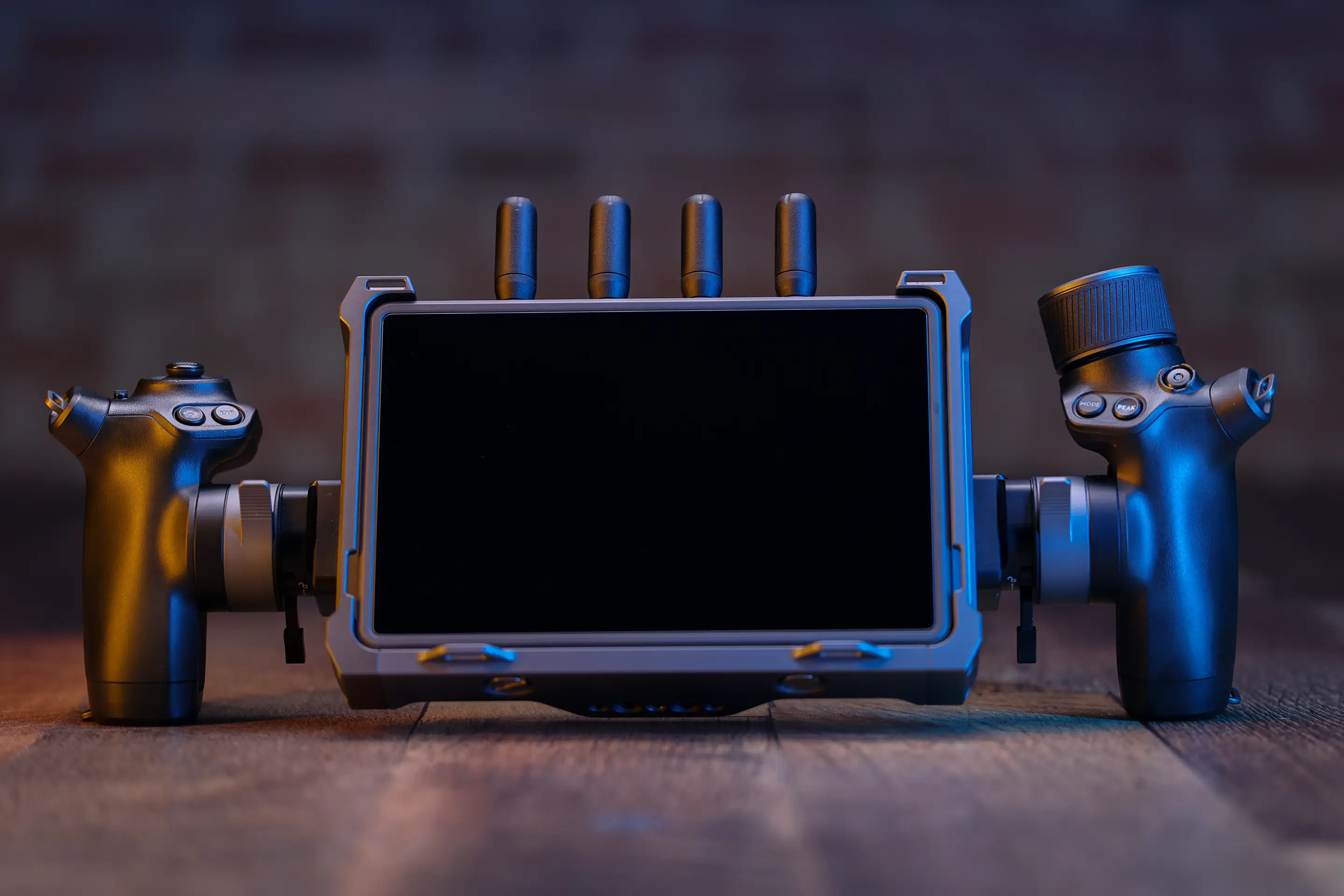
DJI Wireless Transmitter + Monitor.
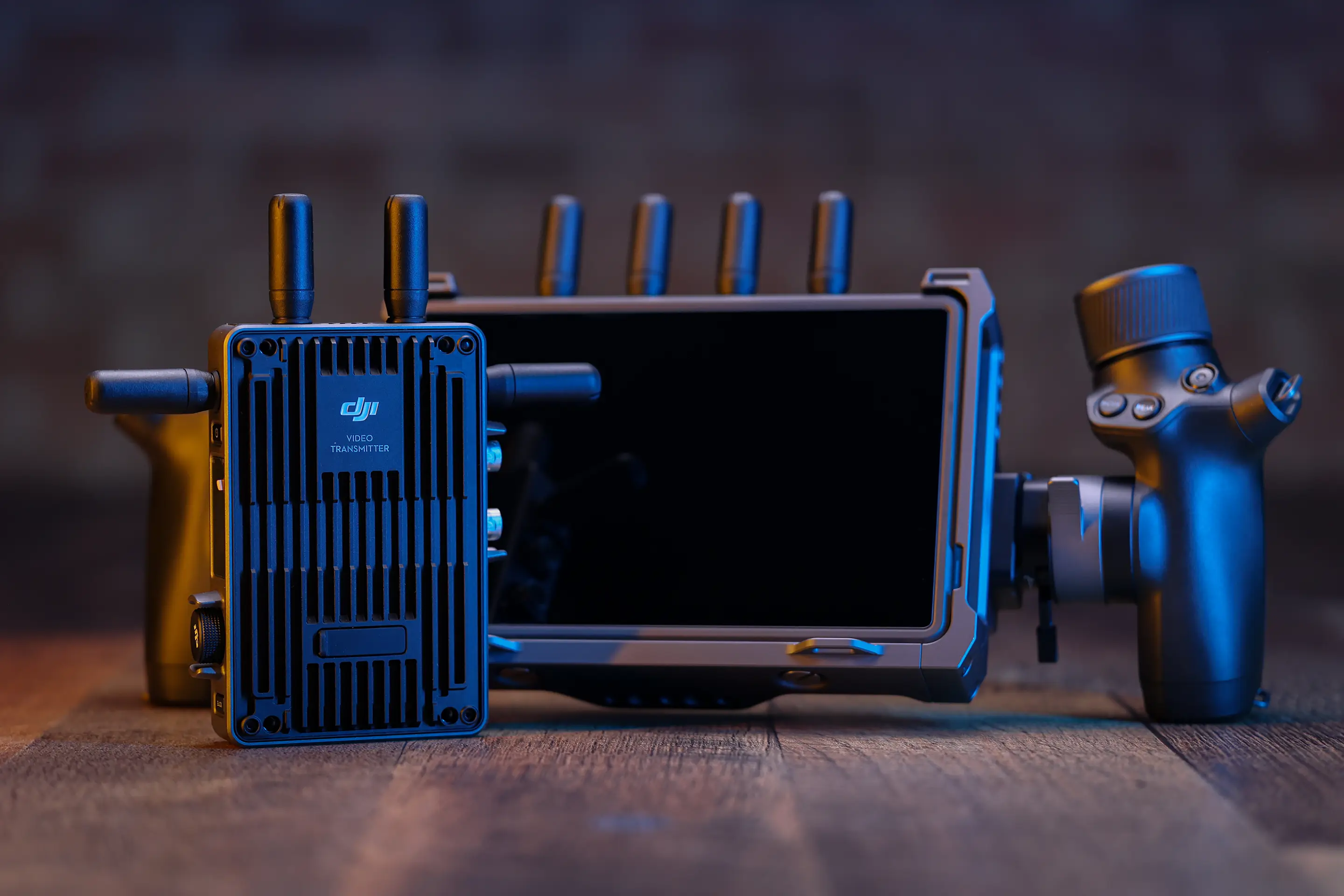
A wireless video transmitter and monitor that sends a live feed from the camera to a second screen. It lets a client or director watch the shot without crowding the operator.
Specs
- Transmitter I/O
- SDI and HDMI in and out
- Video
- 1080p up to 60fps
- Latency
- About 70 ms at 1080p/60fps
- Range
- Up to 6 km (FCC) line of sight, far less in practice indoors
- Monitor
- 7-inch 1500-nit touchscreen with built-in receiver
Getting the image off the camera.
The DJI wireless video system does one thing: it takes the camera's output and puts it on a screen somewhere else in the room. The transmitter mounts on the rig and accepts SDI or HDMI, and the high-bright monitor is a 7-inch 1500-nit touchscreen with the receiver built in, so there is no separate receiver box to power and mount.
Latency is the number that decides whether a wireless system is usable, and this one runs around 70 ms at 1080p/60fps. That is fast enough that a director calling a moment, or a client watching a take, is seeing something close enough to live that nobody has to think about the delay. The rated 6 km range is a line-of-sight figure and is not what you get in a building full of steel and Wi-Fi, but the practical headroom on a normal set is more than we need.
Why it changes how a set runs.
Without wireless video, everyone who needs to see the frame has to crowd the camera. That is fine for a two-person crew and miserable for anyone else. Handing the client a monitor and letting them sit down changes the tone of the day: they see what we see, notes happen in the moment instead of three days later in a revision round, and the operator gets to keep working.
- Client and director monitoring from a comfortable spot instead of over the operator's shoulder
- Gimbal and slider work, where the operator physically cannot stay behind the camera
- Interviews, so the person asking questions can watch framing without breaking eye contact with the subject
- Automotive and real estate, where the camera ends up somewhere a person cannot stand
- Second-set-of-eyes focus checks on long takes
Working with it.
The monitor is bright enough to be read outdoors, which is the whole point of a high-bright panel: a standard screen in direct sun shows you a mirror, not an image. Because it is a full monitor and not just a receiver, it carries the usual monitoring tools and LUT preview, so the person watching a log signal sees something that looks like the finished piece rather than a flat grey version of it.
In practice we treat the wireless link as a monitoring path, not a recording path. The camera and the on-board recorder still own the master file. Wireless is there so that decisions get made by the people who need to make them, while the camera stays where it needs to be.