Audio Gear
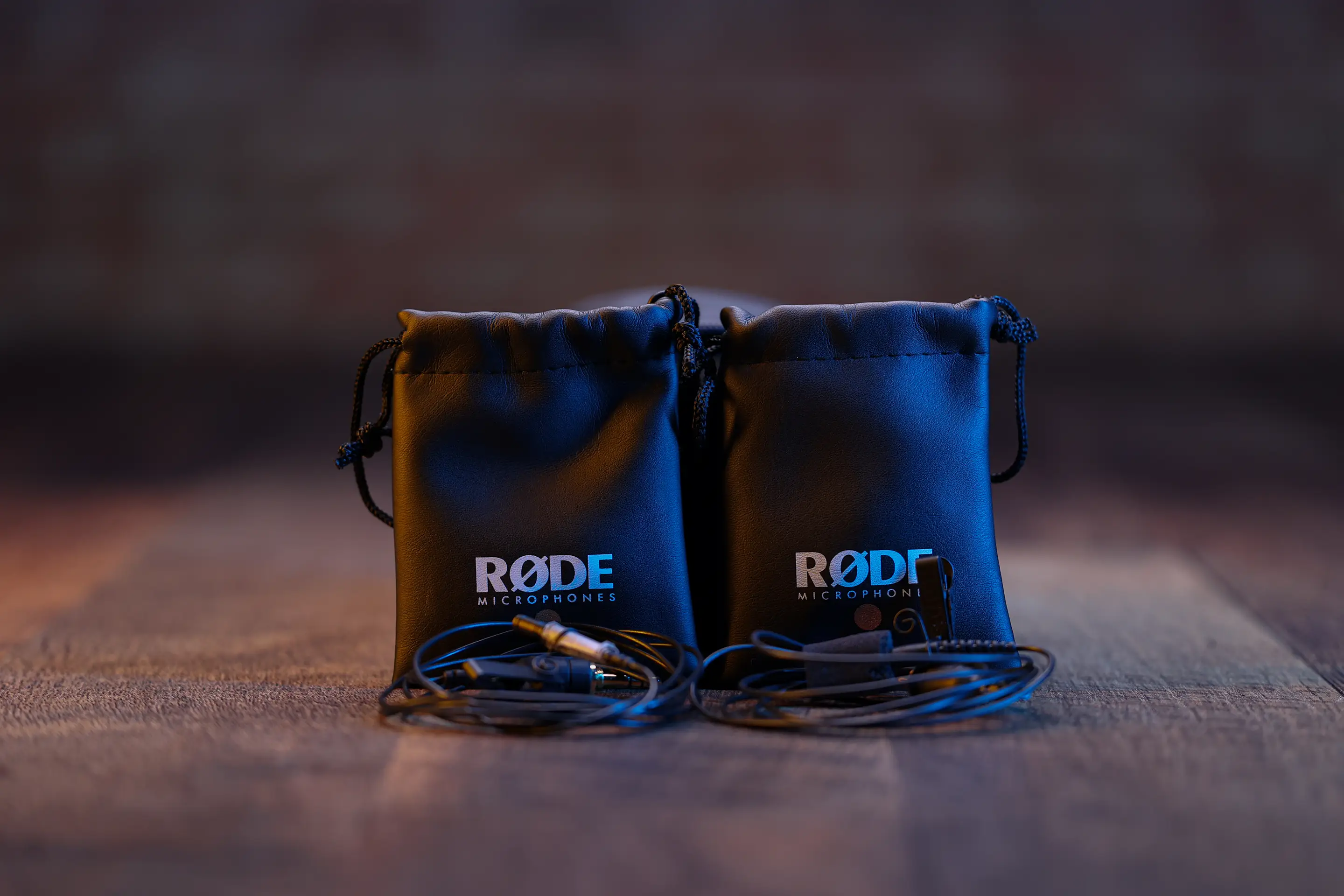
Rode Lav.
Rode lavalier mics clip discreetly to a subject and stay with them. We run them as a backup channel on every interview so one audio failure never costs us the take.
Specs
- Type
- Omnidirectional condenser lavalier (lapel) microphone
- Placement
- Clipped to a lapel, tie, collar or dress, roughly a hand's width below the chin
- Connection
- Feeds a wireless transmitter or a recorder; connector type depends on the specific model
- Accessories
- Pop shield, foam windscreen and furry windshield for outdoor use
- Best for
- Interviews, speeches, vows, presentations and any dialogue where the subject moves
A microphone that travels with the person.
A lavalier is a small condenser microphone that clips to clothing and stays a fixed distance from the mouth no matter where the subject goes. That single property is the whole argument for it. A boom operator has to track a moving person and keep a microphone just out of frame; a lav does not care that the person turned their head, walked to the window, or wandered into a hallway. The level stays consistent because the microphone and the mouth move together.
Lavaliers are almost always omnidirectional, meaning they pick up from all directions rather than aiming at anything. That sounds like a weakness and mostly is not, because the microphone is close enough to the source that proximity does the work a directional pattern would otherwise do. It also means a lav is far less sensitive to a subject turning away from it, and less prone to the hollow, phasey sound you get when a directional capsule is bumped off axis.
Where we put them.
On an interview, a lav goes on the subject and runs to a recorder as an independent track while a shotgun handles the primary sound. Two sources, two tracks, and neither one is a single point of failure. On a wedding, a lav on the officiant or the groom is the only realistic way to capture vows spoken quietly with a camera thirty feet back. On corporate and event work it goes on whoever is speaking, because a person walking a stage cannot be boomed.
- Seated and standing interviews, as a second track alongside a boomed shotgun
- Wedding vows and ceremony audio, where the camera has to stay at a distance
- Presentations, panels and stage talks, where the speaker moves
- Walk-and-talk pieces and any on-camera host segment
The craft is in the rigging.
A lav is only as good as the person who mounted it. Placed badly, it rustles against a collar, catches a necklace, or picks up a jacket zipper on every breath. Placed well, it disappears. We spend real time on this: keeping the capsule clear of fabric that can move against it, taping the cable so it does not tug, hiding the wire through a shirt, and using a foam or furry windshield when there is any breeze at all.
We also check it in headphones with the subject moving, not sitting still, because clothing noise only shows up once someone actually turns their body. Then we record it as its own track, so that if a lav does fail mid-take, the day is not lost.