Audio Gear
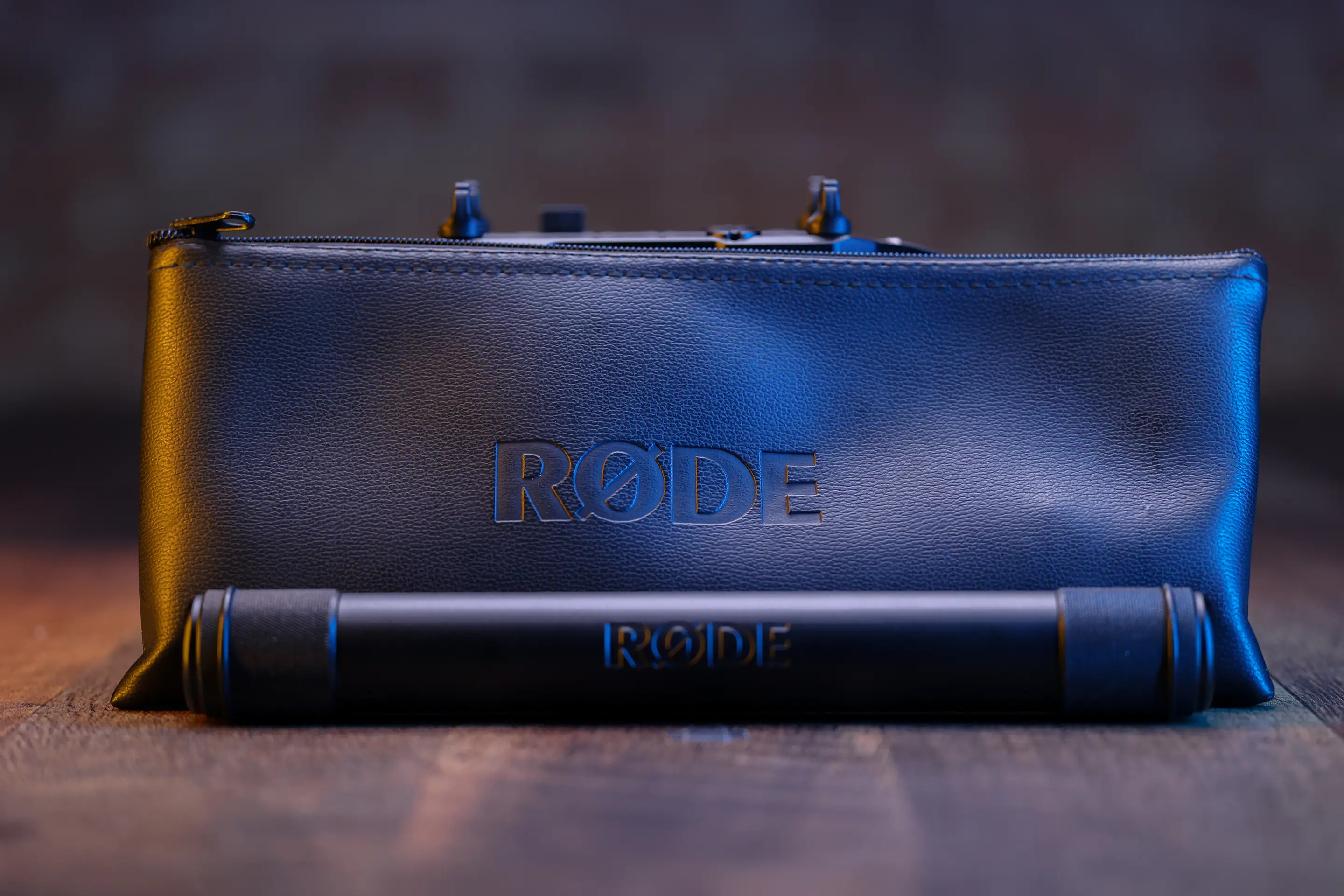
Rode NTG3.
The Rode NTG3 is our boom shotgun mic. It rejects room noise and holds up outdoors in wind, which is what makes interview audio sound intentional rather than incidental.
Specs
- Type
- RF-bias condenser shotgun microphone
- Polar pattern
- Supercardioid
- Frequency range
- 40 Hz to 20 kHz
- Self-noise
- 13 dBA
- Max SPL
- 130 dB SPL (1 kHz, 1% THD into 1k ohm)
- Power
- 48 V phantom power, balanced XLR output
- Size and weight
- 255 mm long, 19 mm diameter, 163 g
The microphone that stays out of the frame.
A shotgun microphone is a directional tool. The NTG3 is supercardioid, which means it listens hard along its axis and rejects a good deal of what arrives from the sides. Point it at a mouth and the mouth is what you get. Point it at a mouth from a boom pole overhead, close enough that the room does not get a say, and you get dialogue that sounds like the person was recorded in a quiet space even when they were not.
Two numbers explain why we keep it on the boom rather than something cheaper. Self-noise of 13 dBA means the microphone's own hiss stays under a soft-spoken subject instead of sitting on top of them, so we are not stuck choosing between an audible noise floor and a track we cannot bring up. Max SPL of 130 dB means the other end of the range is covered too: it does not fall apart when someone laughs, shouts, or a machine kicks on beside them.
Why RF bias matters outdoors.
The NTG3 uses radio frequency bias circuitry rather than the conventional high-impedance design most condensers use. The practical result is that it shrugs off moisture. A cold morning, fog off the Columbia, a humid tent, a subject sweating under lights: the conditions that make a typical shotgun start crackling and spitting are conditions this microphone tends to work straight through. In the Pacific Northwest that is not a marketing bullet, it is most of the year.
How we actually use it.
It runs on 48 V phantom power over a balanced XLR line, so it lives on a boom pole into a field recorder or straight into a camera with proper XLR inputs. On an interview it is our primary source, boomed in from above and just outside frame, with a lavalier running as a second track for safety. On location days it is the tool for wild lines, room tone and any sound we will need later.
- Boomed dialogue and interviews, run into a field recorder or camera XLR input
- The A-track on interviews, with a lav mic recorded in parallel as backup
- Event and corporate speech, where the microphone must stay out of the shot
- Location sound effects, wild lines and room tone during b-roll
- Outdoor and humid conditions, where its moisture resistance keeps it working
It is not a magic wand. A shotgun in a small, hard-walled room will pick up reflections and sound boxy, and no microphone recovers from being three feet too far away. The rule we work by is simple: get it close, get it off-axis to the noise, and give the person recording it a real set of headphones.