Storage
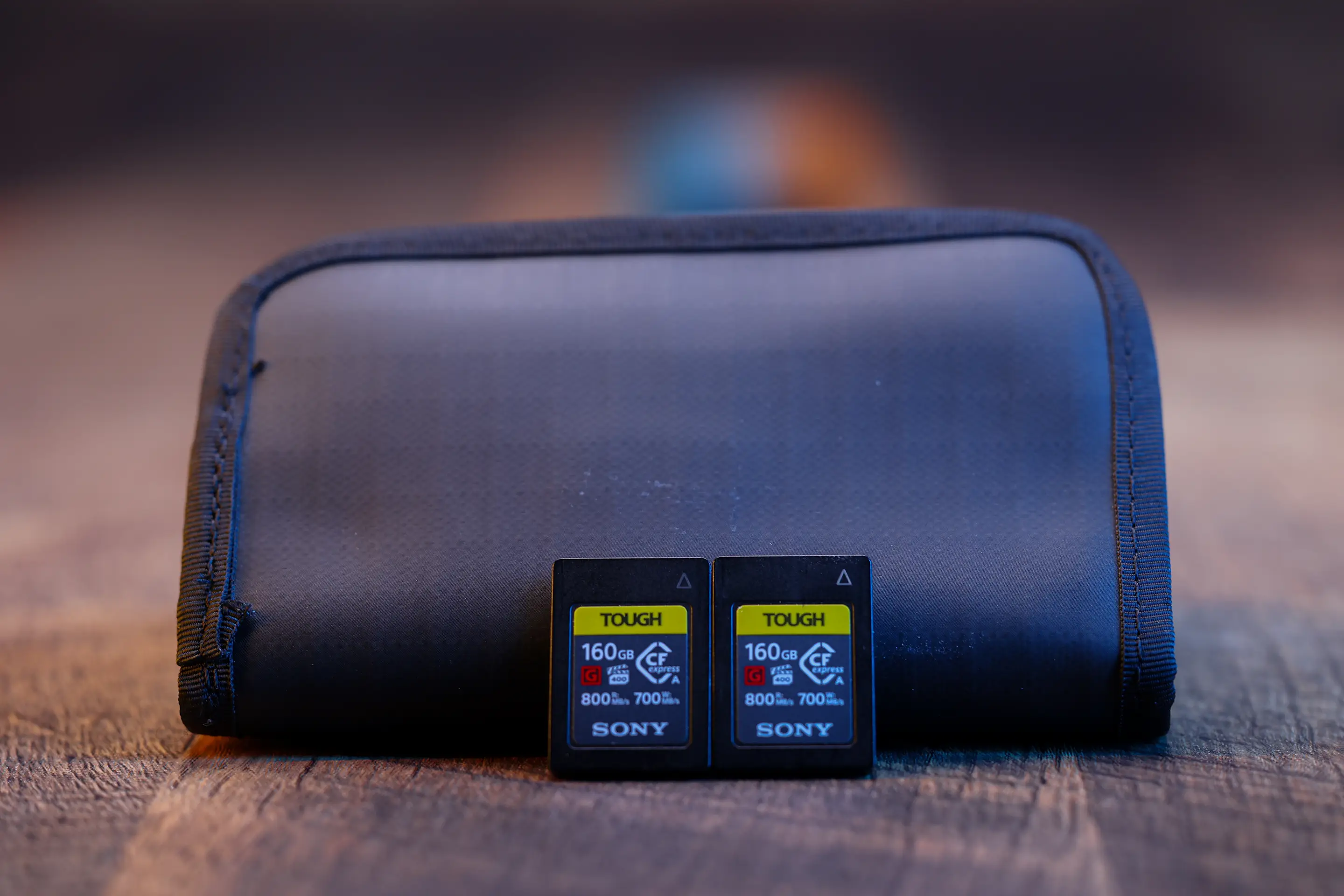
CF-Express Card 160GB.
CFexpress cards are fast enough to sustain high-bitrate 4K and slow-motion capture without dropping frames — a requirement of the codecs we shoot, not a luxury.
Specs
- Format
- CFexpress
- Capacity
- 160GB
- Used for
- In-camera recording of high-bitrate and slow-motion codecs
Why the card matters more than people think.
A memory card is the least glamorous thing in the bag and the only piece of gear that can lose a day of work outright. Everything else has a workaround. If the lens is soft you can reframe, if a light dies you can bounce a window, but if the card can't keep up with the codec, the camera stops recording mid-take and there is nothing to recover. That is the entire reason we shoot to CFexpress rather than the cheaper SD cards that most of our bodies will also accept.
The number that decides whether a card is usable isn't the headline read speed printed on the label. It's the sustained write speed — how fast the card can keep taking data in, minute after minute, once its cache is full and it has warmed up in a camera that's been running all afternoon. High-bitrate formats like 4K in a 10-bit intra-frame codec, or high-frame-rate slow-motion, push a constant firehose at the card. A card that peaks high but sags under sustained load will drop frames or throw a write error, usually at the worst possible moment.
How we actually use them.
160GB is a deliberate size. It's big enough to shoot a full ceremony or a long interview block without swapping, and small enough that a single card failure never takes the whole day with it. Running several mid-size cards instead of one enormous one is cheap insurance — the loss is capped by design.
- One card, one clearly-labelled slot in the case — full cards face down, empty cards face up, so a glance tells you the state of the bag.
- Cards are never formatted in the field on the basis of "I think I copied that one."
- Every card is copied to two separate drives before it goes back into rotation.
- A verified checksum on the copy, not just a green progress bar — a copy that finished isn't the same as a copy that's correct.
- Cards get formatted in-camera, in the body they'll be used in, never dragged to the trash on a computer.
The rule we don't bend.
No card gets erased until the footage on it exists in two places. That is the single discipline that separates a bad afternoon from a phone call no producer wants to make. Cards are a temporary holding pen, not storage — the moment we're back at the truck or the hotel, the offload starts, and the card stays untouched and full until that offload is confirmed. It costs a few minutes and a few more cards, and it means that a wedding, a shoot day, or a client's launch spot has never lived in only one place.