Misc
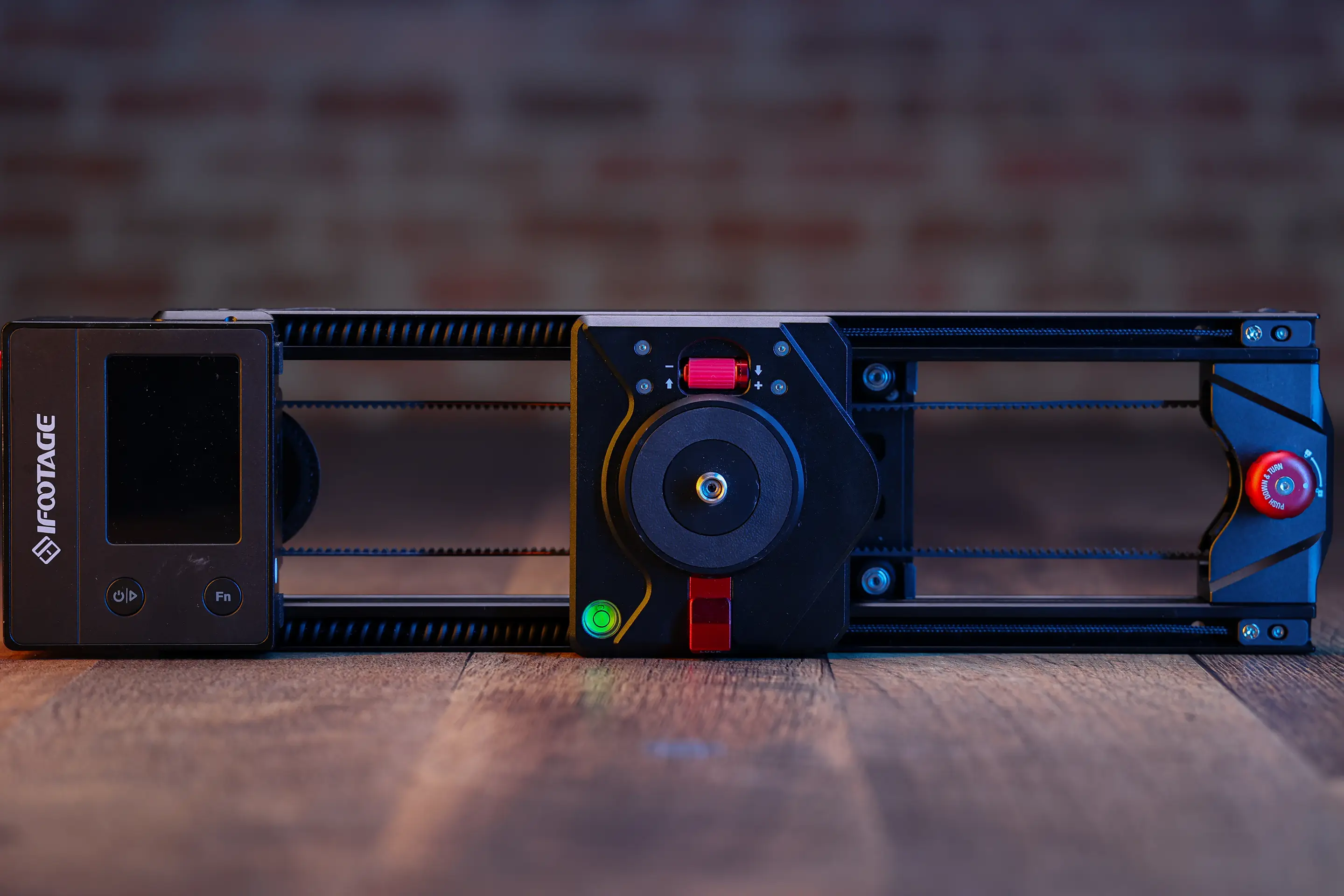
Slider.
A camera slider for controlled, repeatable motion. Small deliberate movement is what separates a considered product or detail shot from a static one.
Specs
- Type
- Camera slider
- Motion
- Linear track — lateral, forward or vertical moves
- Role
- Controlled, repeatable camera movement on locked-off setups
The move that doesn't call attention to itself.
A slider is a straight track the camera rides along. That's all it is, and it's one of the most useful pieces of grip we own — because the best camera move on most shoots is small, slow, dead-straight, and completely invisible to the viewer. A gimbal floats. A handheld shot breathes. A slider glides in one perfectly controlled line, and the shot reads as intentional in a way the other two rarely do.
That control is why a slide is the right tool for a certain kind of image and the wrong tool for the rest. It cannot follow a subject through a doorway or run alongside a bride. What it can do is take a static composition and give it exactly enough motion to be alive, without ever wobbling, drifting or reminding the audience that a person is holding a camera.
Where it earns its keep.
- Interviews and corporate — a slow lateral drift behind the subject that separates them from the background and keeps a talking head from feeling like security footage.
- Product and commercial work — a controlled reveal across a surface, where the move itself is the shot.
- Real estate — a smooth push through a doorway that lets a room unfold, which sells space far better than a static wide.
- Detail and B-roll — rings, flowers, place settings, dashboards; a slide across a small object gives it scale and weight.
- Anywhere the shot needs parallax — foreground moving against background — because that's what makes a two-dimensional frame read as depth.
Parallax is the whole point.
That last one deserves its own paragraph, because it's the thing a slider does that no other tool substitutes for. Zooming changes framing but nothing moves relative to anything else. Slide the camera even a few inches laterally with something in the foreground, and the foreground shifts against the background at a different rate. Your eye reads that instantly as depth. It's why a slide across a table with a glass in the foreground looks three-dimensional and a static wide of the same table looks flat — and it's why we'll set up a slider for a shot that only moves eighteen inches.
Discipline over spectacle.
The mistake with sliders is using them constantly. A film where every single shot is drifting slowly to the left is exhausting, and it flags itself as a video rather than reading as a film. We use the slider where the move means something: to reveal, to add depth, to breathe life into a shot that would otherwise sit still for too long. The rest of the time the camera is locked off, handheld, or on a gimbal — because the whole reason to own several ways of moving a camera is so that each one gets used only when it's the right answer.