Lenses
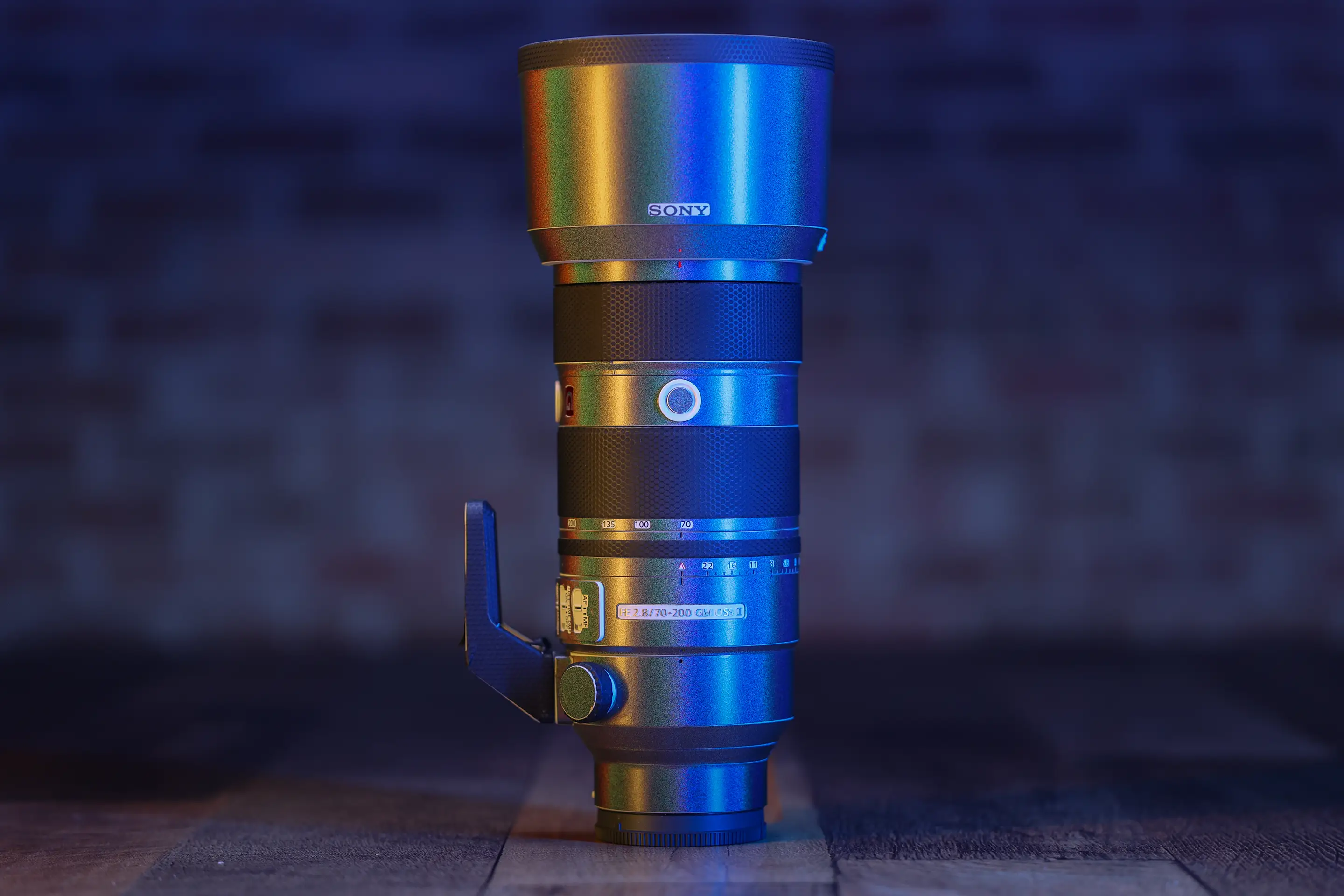
Sony 70-200GM II.
The Sony 70-200mm G Master II is a sharp, fast-focusing telephoto that stays light enough to handhold all day. It's our long lens on the FX6 for ceremonies and motorsport.
Specs
- Focal length
- 70-200mm (full-frame, Sony E-mount)
- Maximum aperture
- f/2.8, constant through the zoom range
- Optical design
- 17 elements in 14 groups
- Aperture blades
- 11, circular
- Minimum focus distance
- 0.4m at 70mm, 0.82m at 200mm
- Stabilization
- Optical SteadyShot (OSS), three modes
- Filter thread / weight
- 77mm / 1,045g
Reach, without being in the room.
The Sony FE 70-200mm f/2.8 GM OSS II is the lens we use when the right thing to do is stay out of the way. A wedding ceremony shot from the back of the aisle at 200mm reads as intimate, not distant — the compression pulls the couple forward, the guests fall away, and nobody in the room has a camera operator in their eyeline. Same logic on a corporate stage, a keynote, or a graduation: we can hold a tight frame from a fixed position at the back and never break the event.
The constant f/2.8 is what makes that possible in the light we actually get. Reception halls, hangar events, indoor arenas and PNW winter afternoons are not bright, and a variable-aperture telephoto would be a stop or two down exactly where we need it. Eleven circular aperture blades keep the out-of-focus background clean rather than busy, which is most of why a 200mm f/2.8 frame looks the way it does.
Where it earns its weight.
- Wedding ceremonies and vows shot long from the back of the venue
- Interviews with real background separation, where the room falls away behind the subject
- Automotive and motorsport — panning at the track, where OSS has a dedicated mode for it
- Live events, stage and speaker coverage from a locked-off position
- Commercial and brand work where compression flattens a busy background into a clean one
Why the second-generation version matters for video.
At 1,045g this is meaningfully lighter than the telephoto zooms it replaced, and that is not a spec-sheet detail — it is the difference between a lens that will balance on a gimbal and one that won't, and the difference between a comfortable ceremony and a sore shoulder by the reception. Sony also redesigned the optics to cut focus breathing, so a rack focus during an interview doesn't visibly change the framing. Optical SteadyShot with a panning mode means we can follow a car or a runner without the stabilizer fighting the move.
It also takes Sony's 1.4x and 2.0x teleconverters with autofocus intact, which turns it into a longer lens for the rare job that needs it without us carrying a separate 300mm or 400mm. The 77mm filter thread means our polarizer for this lens is a different size than the 82mm zooms — a small annoyance worth knowing before you're on set.
How we plan around it.
A 70-200mm needs distance to work. In a small venue there simply isn't enough room to get back far enough, and it becomes a detail lens instead of a coverage lens. That's why we scout: when we walk a venue we're asking whether there is a back-of-room position long enough to shoot the ceremony from, and if not, we're planning a second-body 24-70mm instead. Used correctly, this is the lens that gets the shot nobody noticed us taking.