Misc
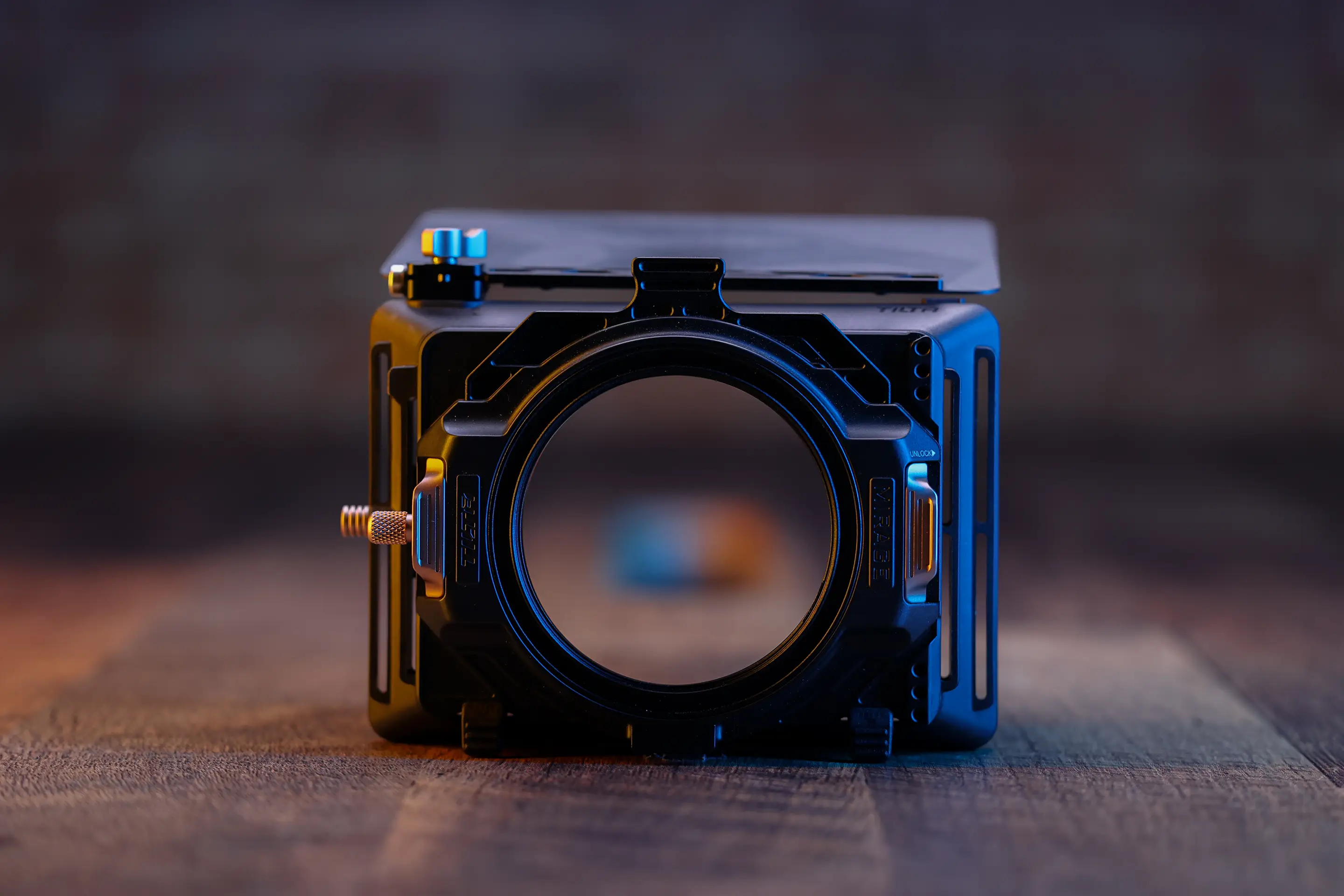
Tilta Matte Box.
The Tilta matte box blocks stray light from hitting the front element and holds filters securely. It's what keeps contrast intact when we're shooting toward the sun.
Specs
- Filter size
- 4 x 5.65 in
- Filter stages
- Multi-stage filter trays
- Construction
- Carbon fibre
- Mounting
- Clamp-on to the lens front, or 15mm LWS rods
- Flags
- Top French flag plus hard mattes
Two jobs, one box.
A matte box does two things that nothing else on the camera does well. It blocks light that has no business hitting the front element, and it holds glass in front of the lens in a way that doesn't wobble, doesn't rotate when you don't want it to, and doesn't fall in the dirt. The Tilta matte box does both, and it's built in carbon fibre so it does them without adding meaningful weight to the front of an already front-heavy rig.
The flare-control job is the one people underestimate. Stray light — a practical just outside frame, a window behind the subject, low winter sun raking across the lens — doesn't always announce itself as an obvious flare. Often it just lifts the blacks and washes a stop of contrast out of the image, and you don't notice until you're in the grade wondering why the footage looks thin. The top French flag and the hard mattes shade the front element from exactly those sources. It's a problem you fix on set in ten seconds or fight in post for an hour.
The filter stages.
It takes 4 x 5.65" filters — the cinema standard — in trays that slide in and out. That size exists for a reason: it's big enough not to vignette on the wide end, and rectangular so a graduated filter can be positioned rather than just rotated. Multiple stages means we can stack, which is how the box actually gets used day to day.
- ND to open the aperture back up in daylight and keep shallow depth of field instead of stopping down to f/16.
- A circular polariser to kill reflections on glass and car paint, and to deepen a sky — the one effect no amount of post work truly recreates.
- Diffusion to take the clinical edge off a modern sensor and bloom the highlights, which is where a lot of the "cinematic" feeling actually comes from.
- A graduated ND to hold a bright sky while keeping the ground exposed, positioned exactly where the horizon sits in frame.
- A clear filter as plain physical protection for a front element on an automotive or event shoot.
Why not just screw-in filters.
Screw-in filters work until you own more than one lens. Then every filter needs a size, or a stack of step-up rings, and swapping anything mid-setup takes minutes you don't have. A matte box clamps to the lens front or rides on the rods, and the filters live in trays that swap in seconds regardless of which lens is mounted. On a commercial or automotive shoot where the light changes between setups, that speed is the point. It's also the difference between a camera build that looks like a rental-house rig and one that looks improvised — which matters more than it should when a client is standing next to it.